


Before we begin,
5 years ago, booking a summer flight and assuming fares would stay stable may have worked. Not anymore. A war in the Gulf is pushing oil past $100, jet fuel costs have surged roughly 30% in weeks and about 50% versus a year ago, and airlines are rewriting their pricing playbooks in real time. If you’re still thinking about travel stocks through last quarter’s lens, you’re already behind.
That’s why we built Winvesta Crisps—to break down what’s actually moving the companies you own, in plain language, before the consensus catches up. 60,000+ investors from all over India are already in. What about you?
🔔 Don’t miss out!
Add winvestacrisps@substack.com to your email list so our updates never land in spam.
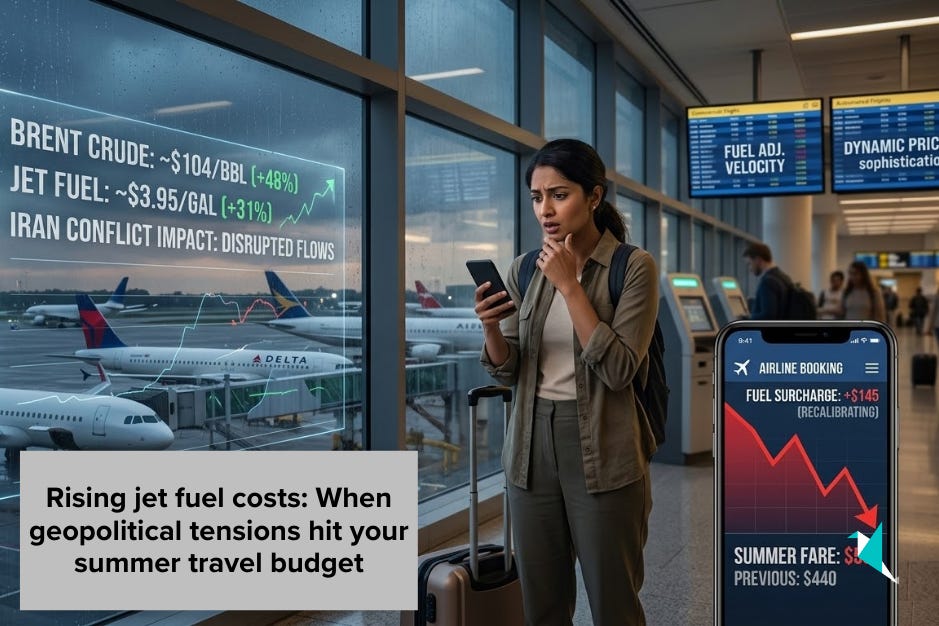
The airline industry entered March 2026 with an unwelcome guest—triple-digit Brent crude, with futures recently trading around 100–104 USD per barrel after surging roughly 40–50% over the past month, driven by escalating conflict in Iran. After years of recovering from pandemic losses, carriers are not just raising fares—they are recalibrating their entire pricing architecture, layering fuel surcharges onto base tickets while scrambling to manage exposure to further volatility. As United, Delta, and Southwest navigate this turbulence, the industry shows how transport leaders must balance shareholder returns with consumer affordability amid persistent geopolitical risk.
🔥 Top movers

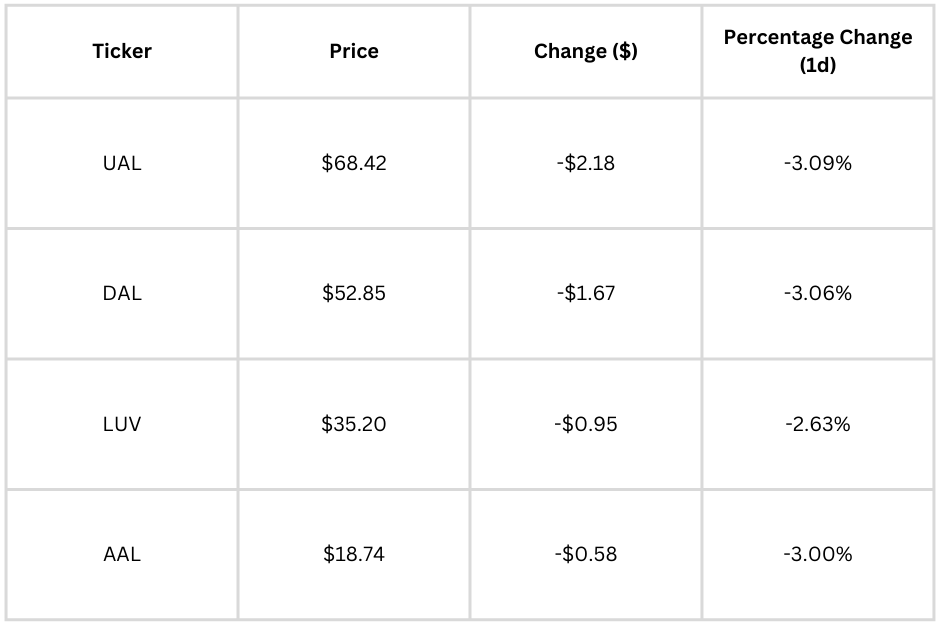
🍏 Current landscape

U.S. airlines face one of their most challenging fuel environments since the 2022 Ukraine crisis, with jet fuel spot prices jumping to roughly 3–4 USD per gallon, up roughly 30% since late February and about 50% versus a year ago, per FRED/EIA data.
Iran conflict impact: Middle East tensions have significantly disrupted crude and refined product flows through the Strait of Hormuz—around one-fifth of seaborne jet fuel supply has been affected, per Reuters, pushing Brent crude to around 100–104 USD per barrel and jet fuel sharply higher.
Fare adjustment velocity: Major international carriers, including Cathay Pacific and Air France-KLM, have introduced additional fuel surcharges on long-haul tickets in recent weeks, while United has signalled domestic fare increases effective April 2026.
Demand resilience testing: Summer 2026 bookings remain in double-digit growth versus 2025 levels, according to industry booking data, but average domestic round-trip fares have risen by several percentage points year-over-year, threatening price-sensitive leisure demand.
Hedging exposure varies: Most large U.S. carriers, including United and Southwest, no longer systematically hedge fuel, leaving them more exposed to spot prices. Delta is partly insulated via its Monroe Energy refinery. European and Asian carriers such as Air France-KLM and Cathay Pacific continue to maintain active hedging programmes, per Reuters.
In short, airlines are stress-testing consumer appetite for travel at precisely the moment demand was expected to peak.
🌀 Turning the tables
How are U.S. carriers repositioning for sustained fuel inflation without sacrificing the demand recovery?
1. Dynamic pricing sophistication
Real-time adjustments: United and Delta now recalibrate fares multiple times daily based on crude oil futures, competitor pricing, and booking velocity—a significant increase in frequency compared with prior years.
Segmentation strategy: Premium cabin fares absorb the bulk of fuel cost increases, while basic economy sees more modest hikes to maintain volume.
2. Capacity discipline enforcement
Industry-wide domestic capacity for summer 2026 is being trimmed below initial plans, with carriers reducing peak-day departures to protect load factors.
Route pruning: Regional carriers have cut dozens of unprofitable routes in Q1 2026, consolidating around high-yield metro pairs where fare increases stick.
3. Ancillary revenue acceleration
Baggage and seat fees: Ancillary revenue has grown in double digits year-over-year across major carriers, helping offset incremental fuel costs.
Loyalty program monetisation and credit card spending have risen meaningfully in early 2026, providing cash flow insulation against operational margin pressure.
Want to position around these trends? You can trade airline names and energy stocks directly from India on the Winvesta app—no U.S. bank account needed.
🚀 Join 60,000+ investors—become a paying subscriber or download the Winvesta app and fund your account to get insights like this for free!