



CoreWeave entered its Q4 2025 earnings call on Thursday with one of the most extraordinary demand stories in cloud computing history—and still watched its stock plunge nearly 19% the next morning. The AI cloud infrastructure specialist reported revenue of $1.57 billion, beating Wall Street’s $1.55 billion estimate, while full-year 2025 revenue hit $5.1 billion, up 168% year over year. Its contracted revenue backlog surged to $66.8 billion, up more than $50 billion in a single year. And yet, investors ran for the exits. The reason? A first-quarter revenue guide of $1.9 to $2.0 billion—well below the ~$2.29 billion Street consensus—and a staggering 2026 capital expenditure plan of $30 to $35 billion, more than double the low-teens billions the company spent on capex in 2025. The quarterly net loss widened to $452 million as interest expense ballooned to $388 million, and the adjusted per-share loss of $0.56 missed the $0.49 estimate. CEO Michael Intrator told Reuters the company deliberately chose to “build faster,” accepting short-term margin pressure to fulfil what he described as contracted, take-or-pay demand. “Q1 is going to be the low point, and then it’s going to build from there,” he said. CoreWeave is asking investors to accept a simple but uncomfortable proposition: the most capital-intensive buildout in cloud history, funded by more than $21 billion in debt, is the correct response to the most explosive demand cycle the AI industry has ever produced. Whether that proposition holds will define not just CoreWeave’s trajectory, but the entire thesis that specialised AI infrastructure deserves its own category of cloud economics.
🔔 Don’t miss out!
Add winvestacrisps@substack.com to your email list so our updates never land in your spam folder.
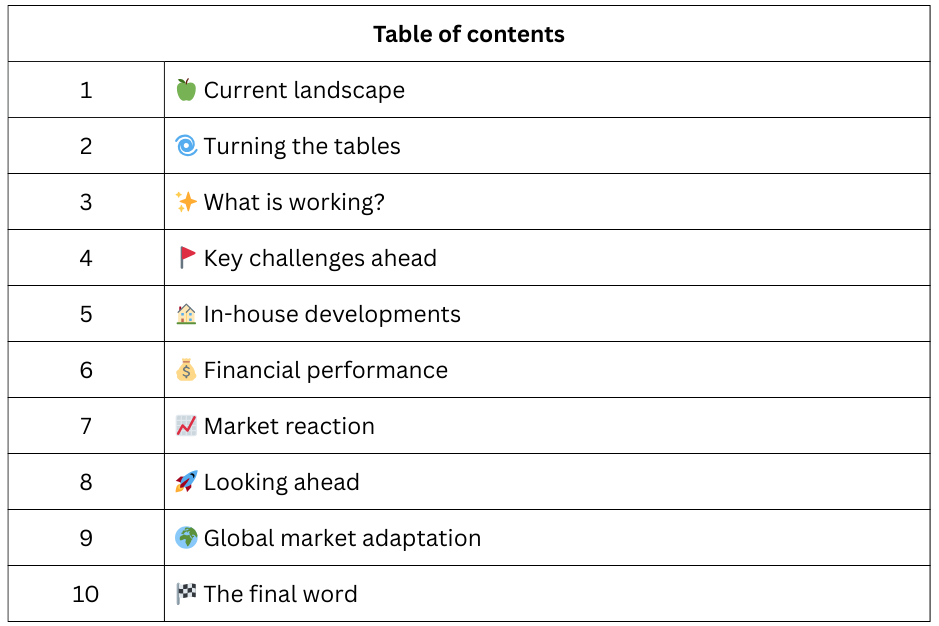
🍏 Current landscape
CoreWeave operates at the intersection of AI’s insatiable compute hunger and cloud infrastructure’s capital-intensive reality. The company specialises in GPU-accelerated cloud services, targeting AI training and inference workloads that traditional hyperscale providers struggle to serve with the same density and speed.
Franchise scale: CoreWeave ended 2025 operating 43 active data centres across the United States and Europe, up from 32 at the start of the year, with more than 850 megawatts of active power capacity. The company added approximately 260 megawatts in Q4 alone—a full third of its installed base in a single quarter. According to CEO Intrator on the earnings call, citing third-party estimates, CoreWeave is now larger than the 15 largest neo-clouds combined across North America and Europe.
Backlog explosion: The contracted revenue backlog surged to $66.8 billion, an increase of $11.2 billion sequentially and more than $50 billion year over year. The weighted average contract length extended from roughly four years to roughly five years over 2025, meaning this backlog represents approximately five years of committed, take-or-pay revenue from some of the world’s largest AI developers. Management confirmed that every contract for new capacity is expected to begin generating revenue by year-end 2026.
The earnings miss: While Q4 revenue of $1.57 billion beat the $1.55 billion consensus, the bottom line disappointed sharply. The GAAP net loss widened to $452 million (versus $51 million a year earlier), with diluted loss per share of $0.89. On an adjusted basis, the per-share loss came in at $0.56 versus the $0.49 analysts expected. Interest expense surged to $388 million from $149 million the prior year, reflecting the enormous debt load required to fund infrastructure at this pace.
The guidance shock: First-quarter 2026 revenue guidance of $1.9 to $2.0 billion came in well below the Street consensus of ~$2.29 billion—the catalyst for the after-hours selloff. Full-year 2026 revenue guidance of $12 to $13 billion represents approximately 140% growth, but the near-term softness and the $30 to $35 billion capex plan spooked a market already nervous about AI infrastructure returns.
In short, CoreWeave delivered the numbers to prove its demand story is real—and then asked investors to fund an even bigger bet on its future, at a time when patience for unprofitable growth is running thin.
🌀 Turning the tables
How is CoreWeave positioning to transform its staggering backlog into a sustainable competitive advantage while managing Wall Street’s growing impatience?
1. Contracted demand as the foundation
Take-or-pay visibility: Unlike speculative infrastructure buildouts, CoreWeave’s $30 to $35 billion 2026 capex is tied to already-signed customer contracts. As CFO Nitin Agrawal stated on the call, “substantially all of it is tied to the already signed customer contracts that we intend to bring online this year.” This is not “build it, and they will come”—it is building to fulfil signed, long-term commitments with five-year average durations. Management expects to double active power capacity to more than 1.7 gigawatts by year-end 2026, with virtually all contracted capacity expected online by 2027.
Customer diversification: CoreWeave made material progress diversifying beyond its initial hyperscaler-heavy customer base. The number of customers committed to spending at least $1 million per year on CoreWeave Cloud grew by nearly 150% in 2025. Q4 saw twice as many new reserved instance customers as any prior quarter, with notable additions including Cognition, CrowdStrike, Cursor, Mercado Libre, Midjourney, and Runway. Demand is now arriving simultaneously from hyperscalers, AI-native firms, and enterprise customers.
2. Strategic NVIDIA partnership as a moat
$2 billion investment: In January 2026, NVIDIA made a $2 billion strategic investment in CoreWeave, deepening a collaboration focused on building multi-gigawatt “AI factories.” CoreWeave became the first cloud platform to achieve NVIDIA’s Exemplar Cloud status for the GB200 NVL72 and is top-ranked by SemiAnalysis among AI cloud providers. The partnership secures priority GPU allocation during industry-wide chip shortages and positions CoreWeave’s proprietary cloud stack for potential licensing to NVIDIA’s broader cloud, enterprise, and sovereign customer base—upside explicitly excluded from 2026 guidance.
Pricing resilience: A key data point from the call: H100 pricing remained broadly stable throughout 2025, while A100 pricing actually increased over the year, according to management. Demand for prior-generation GPU architectures remains robust, with supply constrained and inference use cases proliferating rapidly. This pricing stability undermines the bear case that GPU commoditisation will erode CoreWeave’s margins.
3. Capital structure as a competitive weapon
Declining cost of capital: According to management on the earnings call, CoreWeave achieved a 300-basis-point decline in its weighted average interest rate during 2025—a total reduction of nearly 600 basis points since 2023. Based on the current debt balance, management estimated that a 300-basis-point improvement would represent roughly $700 million in annualised interest savings. Per the CFO’s remarks, the company secured more than $18 billion in debt and equity in 2025 across over 200 investment partners, including a $2.6 billion convertible senior note offering in Q4 that was upsized due to overwhelming demand.
No near-term maturities: CoreWeave has no debt maturities before 2029 other than self-amortising contract-backed and vendor financing debt. The revolving credit facility was expanded to $2.5 billion during Q4, and year-end cash and equivalents stood at $4.2 billion. The financing structure uses delayed-draw term loans, meaning capital is drawn only as data centres become operational—matching deployment timing to capital deployment.
✨ What is working?

Want to ride the AI infrastructure wave? Trade CRWV directly from India on the Winvesta app. No US bank account needed.
🚀 Want to trade the names moving markets—CoreWeave, NVIDIA, and more? Join 60,000+ investors on the Winvesta app and get direct access to US stocks.
CoreWeave’s Q4 results and full-year 2025 performance reveal several engines of competitive advantage that the headline stock decline obscures: